
Nature’s Artwork
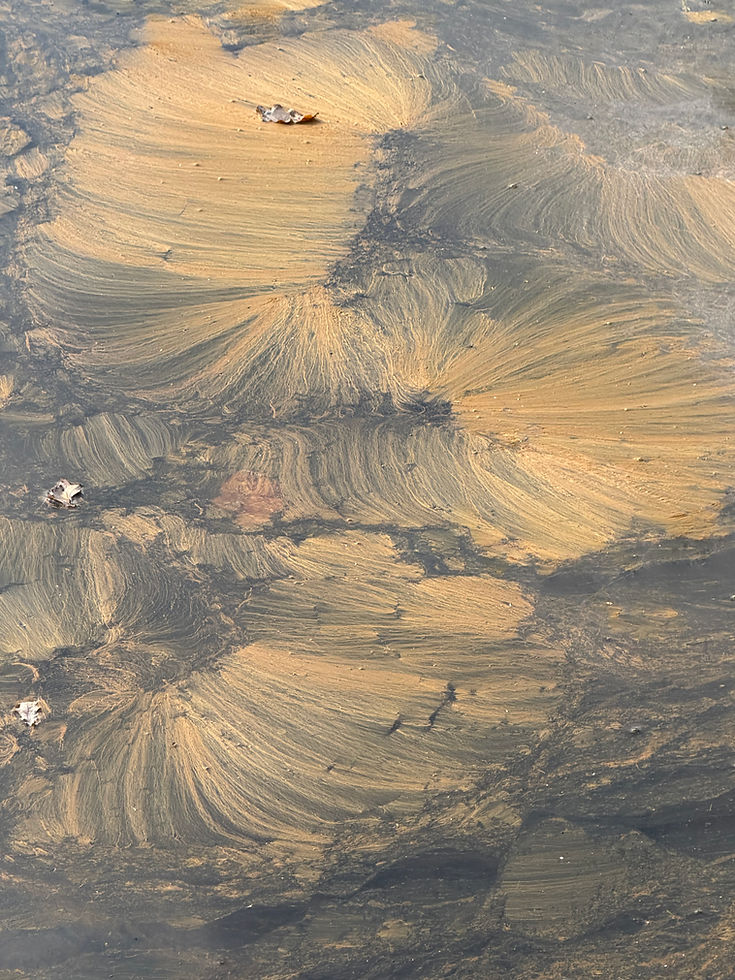
The patterns in this video are a beautiful example of the iron-rich deposits that can occur naturally in freshwater streams. They may involve iron-oxidising bacteria (notably Leptothrixand Gallionella), but we must be cautious about identifying them definitively without microscopic or molecular examination.
What are we looking at?
The striking golden-orange colour is suggestive of iron oxides and, more particularly, iron oxyhydroxides – naturally occurring compounds often associated with what is commonly called iron ochre.
Groundwater moving through iron-bearing soils and sediments can carry dissolved iron in its reduced, ferrous form (Fe²⁺). When this water reaches an oxygenated stream, the iron can oxidise to ferric iron (Fe³⁺), forming insoluble compounds which precipitate out of the water.
Certain iron-oxidising bacteria can accelerate this process. Some obtain energy by oxidising ferrous iron and produce iron-rich deposits around their cells or in associated sheaths. Genera such as Gallionella and Leptothrix are well known for their association with iron deposits, although they have different biological characteristics.
However, the beautiful patterns in this video do not necessarily indicate bacterial activity. Abiotic chemical oxidation is also common and can produce similar macroscopic deposits. The material could equally be iron-rich sediment deposited and shaped by water flowing across the stream bed. Without collecting and examining the material, we cannot confidently distinguish between these explanations.
Where does the iron come from?
There are several possible natural sources. Groundwater seeping through iron-bearing Tertiary or Quaternary sediments of the New Forest may introduce dissolved iron into the stream. Organic soils and accumulated leaf litter can also create oxygen-poor conditions in which iron becomes mobilised. When this water reaches the oxygenated stream, the iron can oxidise and precipitate.
And what creates those extraordinary patterns?
The delicate swirling, feathery and fan-like structures may develop as iron-rich material accumulates and is shaped by the movement of water. If bacterial sheaths or a thin surface film are present, slight currents and surface tension can stretch, fold and rearrange them into intricate patterns. Fine sediment, fallen leaves and other debris may become trapped in the deposits and accentuate their appearance. Purely abiotic precipitates can form equally striking patterns under the same flow conditions.
The effect is particularly striking in shallow, relatively slow-moving water, where there is sufficient movement to shape the deposits without immediately dispersing them. When the light is right, the golden-orange material against the reflections of the sky creates an extraordinary visual effect.
A particularly interesting location
There is an added reason to find this interesting: the stream is very close to the point where it leaves Lyndhurst Wastewater Treatment Works.
When we sampled the stream two days before taking this video, the results for nitrate, phosphate, ammonia and E. coli were all exceptionally low. These are encouraging findings and indicate very good results for those particular measurements at that time.
They do not, of course, establish that the stream is free from all pollution, nor do they tell us the precise origin of the golden deposits. But they provide useful additional evidence about the water quality at the time of sampling.
In short
The golden colour is suggestive of naturally occurring iron oxides and oxyhydroxides. Iron-oxidising bacteria may contribute to their formation, or the patterns may simply be iron-rich sediment shaped by flowing water (or a combination of both). Either way, this is a wonderful example of the natural processes that make our New Forest streams so interesting – and a reminder that there is often much more happening beneath the surface than first meets the eye.

Comments